If your mental picture of a Starbucks is a big café with a long counter running down one side, Starbucks is asking you to picture something a little different. The company has shared a first look at its latest coffeehouse design — a smaller, more flexible format that is meant to fit into different locations, shapes and sizes, while still feeling warm and welcoming when you walk in.
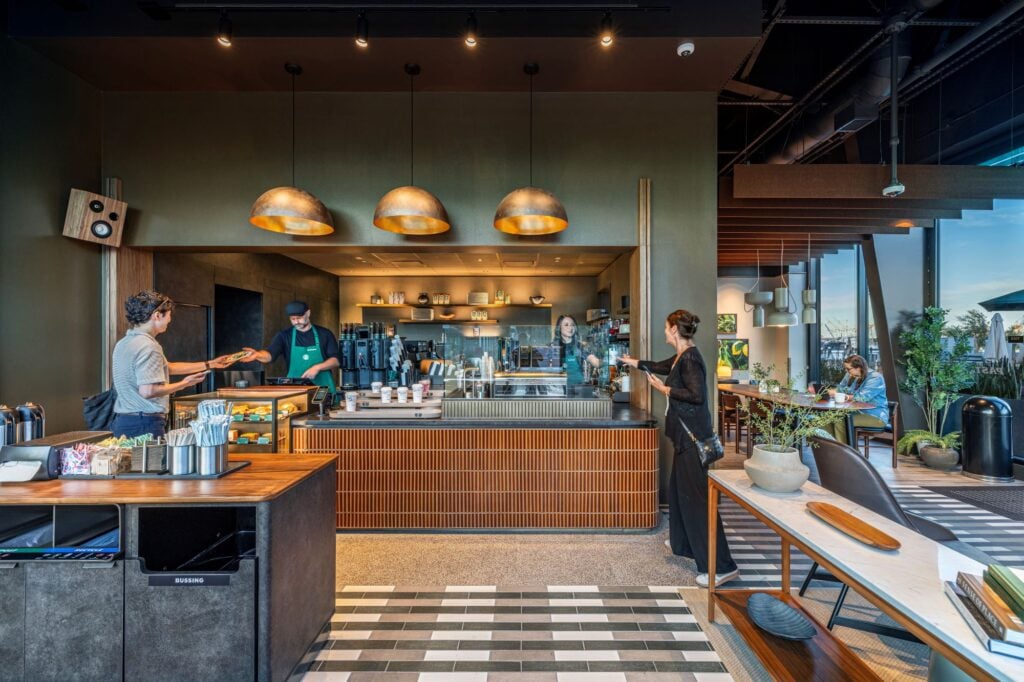
Starbucks first talked about this direction at its Investor Day earlier this year, and prototypes have already opened — one in New York City last year, and another in San Antonio last month. Instead of stretching the counter across the whole café, the new layout shortens it, using what coverage of the prototype describes as a folded bar. A more compact bakery case sits right where customers order, and the seating — the plush, stay-a-while kind, not the grab-and-go kind — is still very much part of the plan.
Smaller Does Not Mean Pickup-Only
That last point matters, because Starbucks has been here before, in the opposite direction. A few years ago, many cafés were reshaped around mobile pickup: fewer comfortable seats, harder stools, and very little reason to linger. The company closed its mobile-only locations last year, and this new concept is clearly not a return to that idea in a smaller box.
The whole point of the smaller format is that a coffeehouse does not need a huge footprint to be a coffeehouse. A narrow city storefront, a converted space, or a neighborhood spot that could never fit a traditional layout could still offer an espresso bar, a bakery case, and a few places to sit down with a friend. In expensive city real estate markets especially, that flexibility could decide whether a Starbucks opens on a block at all.
What It Means for Customers
For customers, the promise is simple: more Starbucks locations that actually feel like Starbucks. If this design works the way the company hopes, you might see cafés tucked into places that were previously too small or oddly shaped — and when you walk in, you should still be able to sit, connect, and enjoy the craft, rather than just collecting a cup from a shelf.
It also fits neatly alongside the coffeehouse uplifts already underway in existing stores, where softer seating, artwork, greenery and local touches are coming back. The uplifts fix the stores Starbucks already has; this flexible design shapes the stores it opens next.
What It Means for Partners
For partners, a design that adapts to the space is a design that has to work behind the bar, too. A shorter, folded bar changes how drinks move from order to handoff, and Starbucks says these concepts were created to support the many ways customers use its coffeehouses today while still giving green apron partners a great experience. A cramped-feeling store helps nobody — so if a smaller café is going to work, it has to feel considered, not squeezed, for the people making the drinks all day.
This is Back to Starbucks in architectural form: less about moving people through as fast as possible, and more about making the coffeehouse worth staying in — just, now, in fewer square feet. If a tiny café in San Antonio or New York can still give you that settle-in feeling, that is a genuinely hopeful sign for where your local store could be headed next.