In South Korea, Starbucks is treating the room as carefully as the drink. Seoul Economic Daily reported on November 1 that Starbucks Korea is rolling out specialty stores whose interiors, seating, and overall feel change with the neighborhood around them. The idea is simple enough to say and harder to pull off: make the visit itself feel like a destination, not just a stop for coffee.
That thinking shows up in how the company sorts its stores. Regular stores are built for everyday coffee. Specialty stores are meant to work as a third place, a comfortable spot near home or work where people can rest and meet. Special stores aim higher still, hoping to become local landmarks. Starbucks Korea now counts 23 specialty stores and 14 special stores across the country, according to the report.
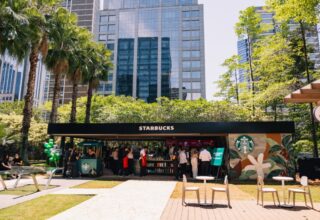
Four specialty stores opened in Korea this year alone, and each one leans into its setting in a different way. The Geoje Sadeung store uses pebbles from Geoje in its entrance and interior decoration. The 63 Sky Picnic store, at the highest point in Seoul in its area, takes its cues from views of the Han River and the city center. The Pohang Hwanho DT store has ondol floor-heated platform seating, a first for Starbucks in Korea, a detail that will feel familiar to anyone who has taken off their shoes and settled in for a long, warm sit.
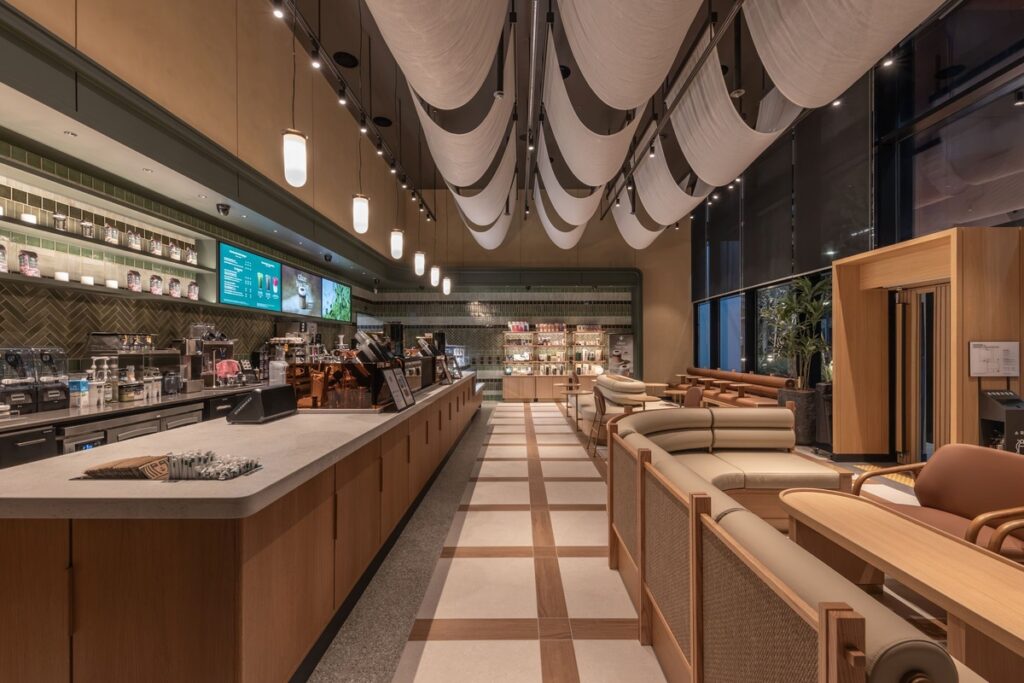
The newest example in the report is Starlit Seongsu N in Seoul’s Seongsu-dong. Seongsu is dense with flagship and pop-up stores for fashion and beauty brands, so Starbucks went with an urban retreat concept for the space. The store covers 237 square meters with 84 seats. A large solid-wood entrance door sets the tone at the threshold, and fabric decorations on the ceiling suggest a resort canopy overhead. It is the kind of room that asks you to slow down for a minute, even in a district built for browsing.
Why Space, and Why Now
Starbucks Korea’s reasoning, as quoted in the report, is blunt about the market it faces. Competition is intensifying amid rapid shifts in trends and a general leveling up of taste, a company official said, adding: “We will give customers a reason to visit our stores through a distinctive spatial experience and build customer loyalty.”
That sentence lands because it names something regulars already know from experience. Coffee quality gets a customer through the door once. The room, the light, the seats, and the sense that a store belongs to its block are what bring someone back on an ordinary Tuesday. In Korea, where the cafe scene moves fast and new concepts open constantly, a store that looks like every other store is easy to pass by.
For those of us watching from the United States, the instinct will sound familiar, even if the expression is different. Starbucks back home has been refreshing thousands of coffeehouses with warmer seating and softer rooms under its Back to Starbucks effort. Korea’s version takes that same belief, that a coffeehouse should feel like a place worth staying in, and pushes it further into local character. A pebble from Geoje, a heated floor in Pohang, a canopy ceiling in Seongsu: none of these change what is in the cup, and all of them change how the visit feels. If Starbucks Korea keeps building stores that could only belong where they stand, the next great visit might be about a door, a view, or a warm floor on a cold day.