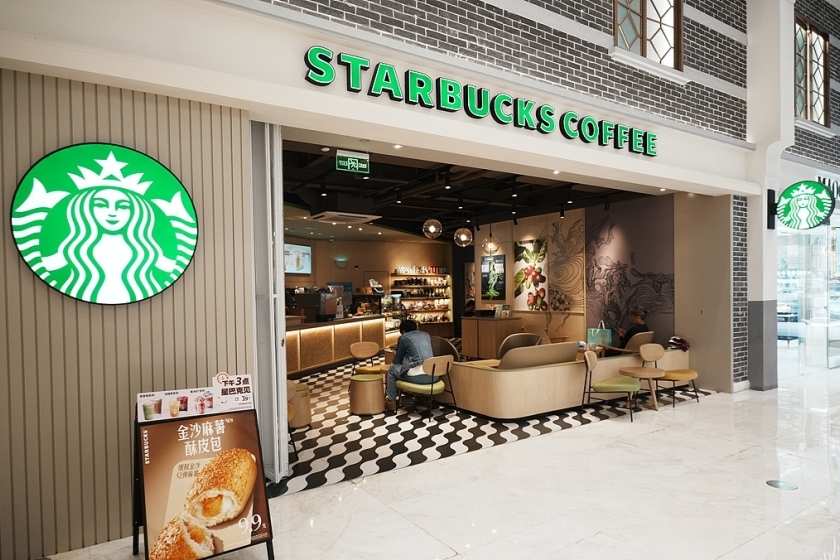
Starting October 22, taking a seat in a Starbucks in mainland China will come with a simple condition: buy something first. Starbucks China announced the nationwide policy on October 21, and stores will post notices so customers see the change as they walk in.
Anyone who has hunted for an open table at a busy Starbucks will understand the problem behind the rule. Seats can fill up with people who are not ordering, sometimes for long stretches, while customers with a drink in hand circle the room looking for a place to sit down. Starbucks is now drawing a clearer line around who those tables are for.
A Clearer Rule for a Crowded Room
The policy is part of what Starbucks China calls its Third Place Initiative, a name that reaches back to the idea that a coffeehouse should feel like a welcoming place between home and work. That history is exactly why the change has drawn so much attention. The third place only works if people can actually use it, and lately that has meant sorting out how shared space gets shared.
Starbucks says partners will be given unified service guidelines and trained to explain the rule in a friendly way. Reasonable special circumstances are supposed to be handled with flexibility, and customers who need assistance, including pregnant women and people with mobility challenges, will continue to receive priority support. Reporting by Seeking Alpha, citing store employees, added that delivery workers, people sheltering from rain, and nearby security guards can still come in and rest without buying anything. Starbucks has not set a minimum spend or a time limit for customers who do order.
The Rule Arrives With a Big Service Investment
This is not just a new sign on the table. Starbucks China plans to invest more than 300 million yuan in fiscal 2027, about $45 million, to improve the in-store experience while the seating rule takes effect.
Nearly half of its stores nationwide will add staffing during peak hours, with busy locations first, such as transportation hubs, business districts, and tourist areas. That adds more than 200,000 hours of frontline service each month. Reserve stores will add another 70,000 hours a month, giving Coffee Masters more time to talk through origins, brewing methods, and tasting notes. Around 1,000 stores will get renovations and equipment upgrades during the year, and a new generation of mobile point of sale systems begins rolling out in January with more than 70 new functions meant to help partners understand customer preferences. If a customer is unhappy with a beverage, partners can remake it free of charge.
Starbucks China chief executive Molly Liu tied the spending to the front line. In the new fiscal year, she said, the company will keep directing resources to its stores, supporting partners to focus on crafting every cup and serving every customer well. Her Thousand Stores, Thousand Looks idea, she noted, shows up not only in store formats and products, but in every interaction.
A Competitive Market, a New Ownership Chapter
Context helps explain the timing. Starbucks faces intense competition in China from lower priced local chains, and customers have become more price conscious. Earlier this year, funds managed by Boyu Capital took a 60 percent stake in Starbucks China retail operations, while Starbucks retained 40 percent and ownership of the brand and intellectual property, which it licenses to the venture. The business, headquartered in Shanghai, runs roughly 8,000 cafes and has talked about growing toward 20,000 over time.
Public reaction so far has been divided, which feels honest for a change like this. Some customers worry a purchase rule makes the third place feel less open. Others welcome a better chance of finding a seat after they have paid for a drink. Both reactions point to the same test. What matters now is how the rule feels in a real store on a rainy afternoon, handled by a partner with good judgment and enough help on the floor.
If the added staffing and store upgrades land the way Starbucks hopes, a customer in China should notice a cleaner room, a shorter wait for help, and a table that is actually available. That would be a third place worth sitting in, coffee in hand.