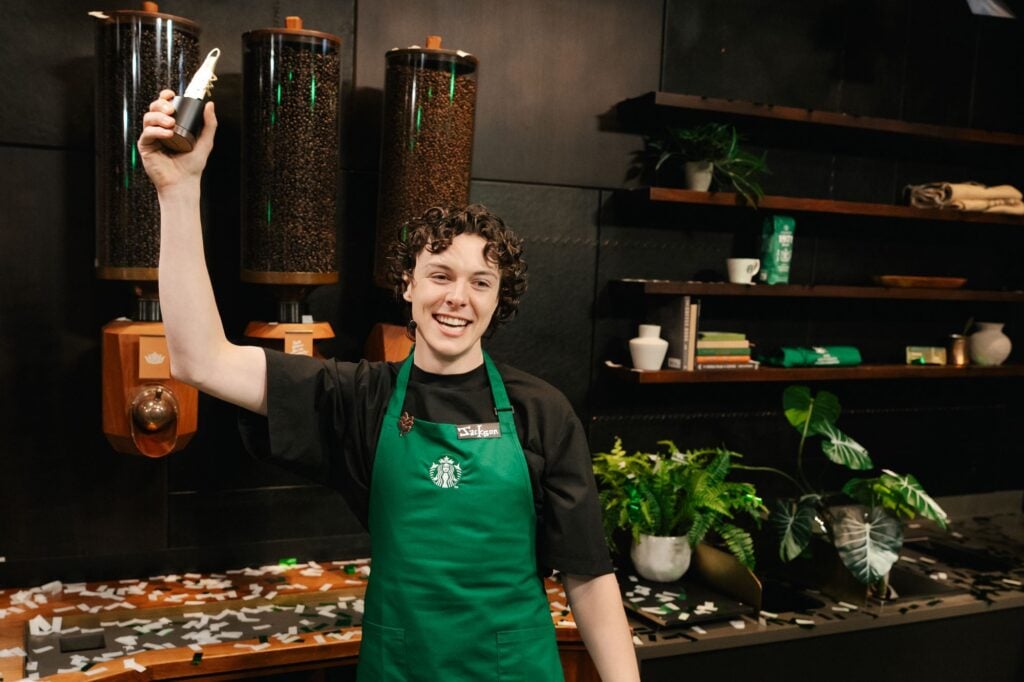
Thousands of partners started this journey in their own coffeehouses back in April. Only 24 made it to Seattle. And at the end of a three-day final, one name was called: Jackson M., a Starbucks partner from the New York Metro region, is the 2026 North America Barista Champion.
The finals brought the 24 regional champions from across the United States and Canada together at the Starbucks Support Center in Seattle, the company’s headquarters. It was the end of a road that ran through coffeehouse, district, area, and regional competitions — months of partners testing the same skills they use behind the bar every day, just with judges watching.
And judged they were, in three very different ways. There was a latte art throwdown, where precision and milk texture are on full display. There was coffee and customer storytelling, where partners shared the stories behind their favorite brews. And there was the coffeehouse rush, where finalists had to craft six beverage orders in six minutes — all while still talking to the judges and the audience.
That last one may sound familiar to anyone who has ever watched a morning peak from the other side of the counter.
Jackson shared the final stage with two other finalists: Emeka P., representing the North Atlantic region, and Richard R., representing Southern California. All three finalists will travel to Hacienda Alsacia, Starbucks’ coffee farm in Costa Rica — a fitting end to a competition that starts, in every sense, with the coffee itself.
What stood out in Jackson’s reaction was how little it sounded like a victory speech. Reflecting on the win, Jackson said “it’s about the people,” adding, “It’s the connection.” It is a small quote, but it captures what this competition seems designed to celebrate. The skills being scored — latte art, beverage quality, working a rush — are technical. The thing being celebrated is what those skills are for.
For partners, the championship creates something Starbucks has been emphasizing a lot lately: a visible path for craft. A barista can start in a neighborhood coffeehouse, compete locally, and end up on a stage in Seattle representing an entire region. Whether or not most partners ever enter, that path says something about how the company wants the job to be seen — not just making drinks to order, but practicing a craft worth recognizing.
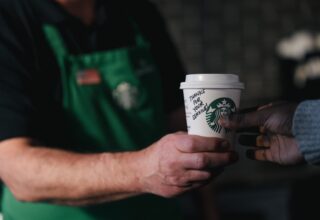
For customers, the champion in your local store will probably never be Jackson. But the person who hands you your drink in the morning is doing a version of the same work the judges scored in Seattle: getting the beverage right, keeping things moving when the line builds, and still managing to make the exchange feel like it was with a person, not a production line.
That is really what Green Apron Service, the standard woven through this competition, is asking for — speed and quality, yes, but with connection on top of both.
Most of us will never see the inside of the finals. We see the everyday version instead, one cup at a time. If Jackson is right that it comes down to people and connection, then the best place to judge Starbucks’ baristas was never really the stage in Seattle. It’s the counter you walk up to tomorrow morning.