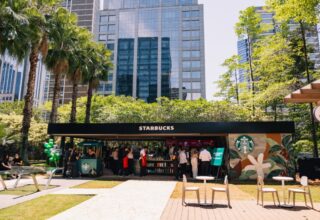
If you grab a latte in Bangkok, Hong Kong, or Singapore, the cup in your hand is not changing. The company behind the counter is. DFI Retail Group has agreed to take sole control of the licensed Starbucks business that runs more than 1,100 coffeehouses across seven Asian markets, in a reorganisation announced on September 30.
The business, operated through a company called Coffee Concepts, covers Thailand, Hong Kong, Singapore, Vietnam, Cambodia, Macau, and Laos. Under the deal, DFI gives up the 50 percent stake it has long held in Maxim’s Caterers. In return, DFI receives full ownership of the Starbucks licensed business, plus about US$340 million in cash when the transaction closes.
A Clean Split After Decades Together
This is a long partnership being carefully untangled, not a sudden breakup. Maxim’s was founded in 1956, and it became a joint venture between Hongkong Caterers and Jardine Matheson in 1972. DFI has held the Jardine interest for the past 40 years, and together the two sides built a combined business of more than 2,000 stores across nine markets.
Hongkong Caterers will become the sole owner of Maxim’s, keeping its restaurants and bakeries, which number more than 1,000 across eight markets. The two groups also plan to keep working together where it helps both sides, including procurement, supply chain, property, digital work, and the yuu Rewards loyalty programme. Most reassuring for regulars, both companies say day to day operations will remain unchanged while the reorganisation goes through.
Thailand and Vietnam Lead the Next Wave of Stores
DFI is not buying this business to leave it as it is. The Starbucks network brought in close to US$750 million of revenue in 2025. DFI expects to grow that at 6 to 7 percent a year through 2029, taking the store count to at least 1,350. That means roughly 250 new coffeehouses, with Thailand and Vietnam, which DFI’s finance chief Wu Kaizhi called high growth coffee markets, first in line. On an investor call on October 1, Wu described the goal plainly: build Starbucks into a billion dollar business within three years.
None of this happens overnight. The deal still needs third party consents and antitrust clearances, and the Starbucks business has to be separated internally from the rest of Maxim’s. The companies expect to complete by the end of March 2027, with a long stop date that can extend to June 30, 2027 if conditions are still outstanding.
For partners working in those 1,100 stores, the near term message is stability. Same stores, same routines, same regulars at the counter. The change sits one level up, in who sets the pace for new locations and investment. If DFI delivers on its store target, plenty of those partners will eventually work alongside new colleagues in new neighborhoods, especially in Thailand and Vietnam.
Licensed stores can be easy to overlook from the United States, where most Starbucks locations are company operated. In Asia, a strong local operator is often the reason a familiar green apron shows up in a new city at all. A simpler ownership structure, plus a clear plan to open hundreds more stores, suggests this corner of the Starbucks map is about to get busier. Your next trip through Bangkok or Ho Chi Minh City may well include a Starbucks that does not exist yet.