This article has been re-blogged from Forbes - written by Roger Dooley. Read the original article here
On May 18, Starbucks Korea rolled out a promotion for a big stainless-steel tumbler it sells as a “tank.” It named the event Tank Day. May 18 is the day South Koreans mourn the hundreds of citizens killed in 1980, when the military sent troops and tanks against pro-democracy protesters in the city of Gwangju.
It got worse. The campaign’s written materials carried the slogan “Tak on the desk,” meant as the harmless thump of a tumbler set on a table. To many Koreans, “tak” points somewhere else: to 1987, when police claimed the tortured student activist Park Jong-chol had simply collapsed after an investigator “struck the desk with a tak.” Set beside tanks and May 18, a coffee promotion had opened two of the country’s rawest authoritarian-era wounds.

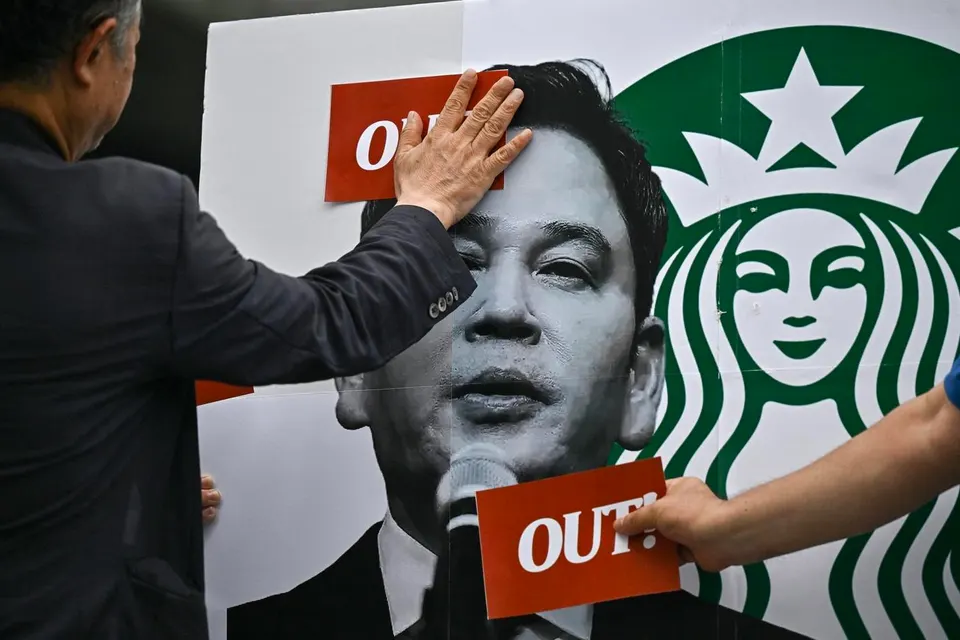
The blowback was immediate. Shinsegae, the group that owns Starbucks Korea, killed the campaign within hours and fired the CEO of the Korean business. Chairman Chung Yong-jin apologized on national television. Police opened an investigation after victims’ families filed complaints. Protesters smashed Starbucks cups outside a store in Gwangju. President Lee Jae Myung weighed in. Then Starbucks Korea did something it had never done since opening in the country in 1999: it announced it would close every store early on a Monday so 24,000 employees could sit through mandatory history and cultural-sensitivity training.
How Did This Get Approved?
The company’s own investigation points less to malice than to a process that never engaged. Seven people reportedly moved the promotion through a four-stage approval. Some signed off without opening the attachments. None flagged the date or the history. The “Tak on the desk” line was reportedly added late and never sent up for approval at all.
Here’s one important clue: Starbucks marketers used AI to help generate the promotional language.
Blame The Machine? Only Halfway.
It would be all too easy to blame AI for this fiasco. That’s just one part of the story, though.
Ask an AI to write a catchy line around a tumbler called a “tank,” and it will optimize for the ordinary meaning of the words, because that is what nearly all of its training data says “tank” means. The rare, market-specific, history-loaded reading is a small needle in a big haystack. AI generation smooths toward the average. That is what it is built to do.
But the same tool is very good at a different job, if you ask it to do that job. Starbucks marketers asked AI to produce. Neither they nor anybody in the entire approval chain asked AI to evaluate.
I know, because I conducted a simple experiment. I ran the concept past Anthropic’s Claude Opus 4.8.
One Prompt Would Have Prevented Disaster
I gave Claude only the minimum details: a major brand, a May promotion in South Korea called “Tank Day,” and the phrase “hit the desk.” I did not name Starbucks or coffee, and I did not mention Gwangju. I told it not to research anything, so its response had to come from the words themselves, not from news coverage it might already have absorbed about the real event or might find by research. I asked simply how customers might react emotionally.
Claude didn’t equivocate. It didn’t say, “Great idea, Roger!” as it often does, even for somewhat inane concepts.
Rather, Claude went straight to the Gwangju Uprising of May 1980, when the military turned tanks on civilians. May, it noted, is a memorial period, not a neutral month, and tanks are the visual shorthand for state violence against citizens. It flagged that the December 2024 martial-law scare, when troops entered the National Assembly, had made all of this raw again for a broad, cross-generational audience. It predicted offense, then boycott sentiment, then demands for an apology and withdrawal, spreading far past the ad’s original reach. It even singled out “hit the desk” as the phrase most likely to be screenshotted, well before anything connected it to Park Jong-chol. One key perception the model predicted was that “a commercial entity is monetizing national trauma and is tone-deaf to it.”
Claude did get one thing wrong when I asked what kind of brand might use this promotion. (I asked to double-check that the AI hadn’t learned about the Starbucks campaign and used that knowledge to influence its predictions.) Working only from the words, it assumed no brand would reach for “tank” without a product-driven reason, and it, with understandable logic, guessed a military video game.
Starbucks did have a product reason: the tank tumbler. That’s why the AI-generated copy leaned into the “tank” framing, and why no one in the chain pushed back. An AI generator won’t look for external connections, double meanings or human reactions unless prompted or trained to do so. An AI evaluator will.
The Empathy Audit Belongs In The Workflow
I have made this case before: once when I ran an empathy audit on a tone-deaf cruise-line letter that had infuriated luxury guests, and again writing about Amish entrepreneurs who use AI to pressure-test client emails.
Using AI as your empathy coach is the third pillar of Neuromarketing 2.0 as described in my book, The Persuasion Engine. The top AI models score far better than the average human on emotional intelligence tests. Marketers and executives who don’t test their messaging to see how it will land with its recipients are missing a huge opportunity. And, as the Starbucks Korea example shows, sometimes taking a big risk.
AI can generate ideas and copy quickly, but adds far more value in predicting how humans will react and suggesting better ways to communicate.
Your Own 60 Second Empathy Audit
The empathy audit is almost free. I most often use Claude for this kind of analysis, but ChatGPT, Gemini, or other powerful model will work. Take your finished message, feed it back to either the same AI tool or a different model, and ask one question: how will this be interpreted by its target recipients? Is there any way it could land poorly or be misinterpreted? That single test would have stopped Tank Day before a designer ever mocked up a poster.
Blaming the AI for creating the Starbucks Korea mess misses the point. Human marketers and their tools created a catastrophically bad promotion, and no one, human or AI, was ever asked the question that would have stopped it before the brand suffered major damage.
Starbucks Korea closed its stores early to teach 24,000 employees their own country’s history. One well-aimed question would have been infinitely faster and less costly.